
Aloha ʻoe i koʻu ʻohana hou
“Hello to My New Jersey Family”

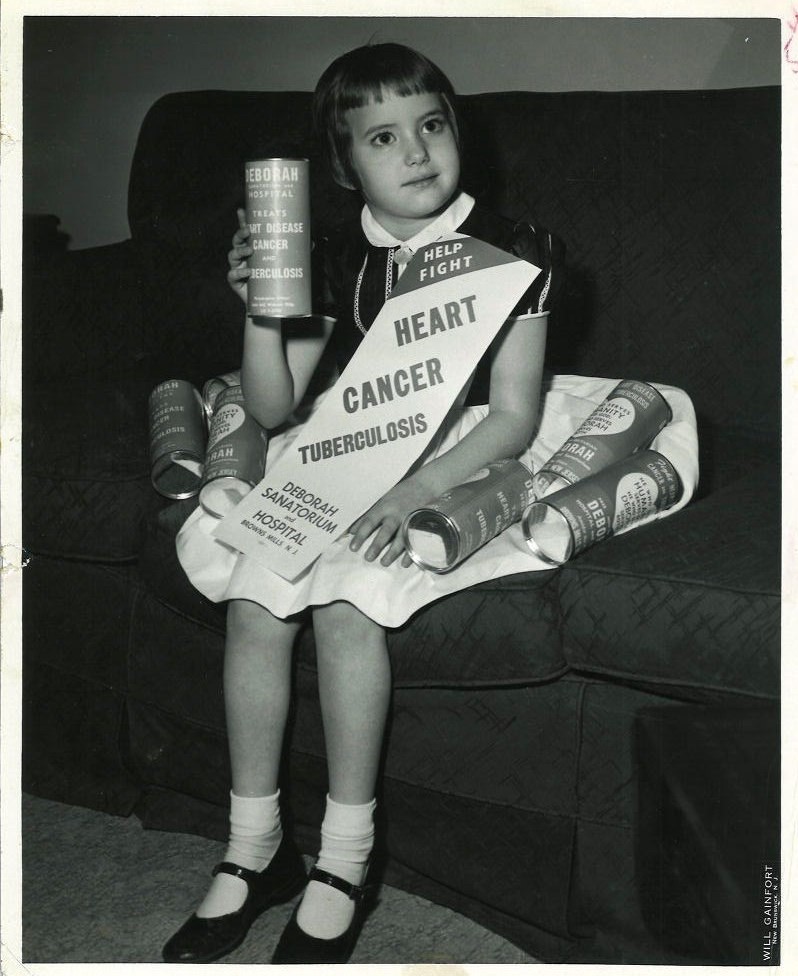
Sandy Zimmerman Armstrong tells everyone that she did not enter the world a perfect child. She was born with a ventricular septal defect (VSD) – a hole in her heart. For some born with a VSD, the hole closes naturally. For others, including Sandy, it did not. In 1959, when Sandy was just five years old, she underwent life-saving open heart surgery, performed at Deborah Heart and Lung Center by legendary cardiac surgeon Dr. Charles Bailey. At that time, this specific type of surgical procedure had a 50-percent rate of success.
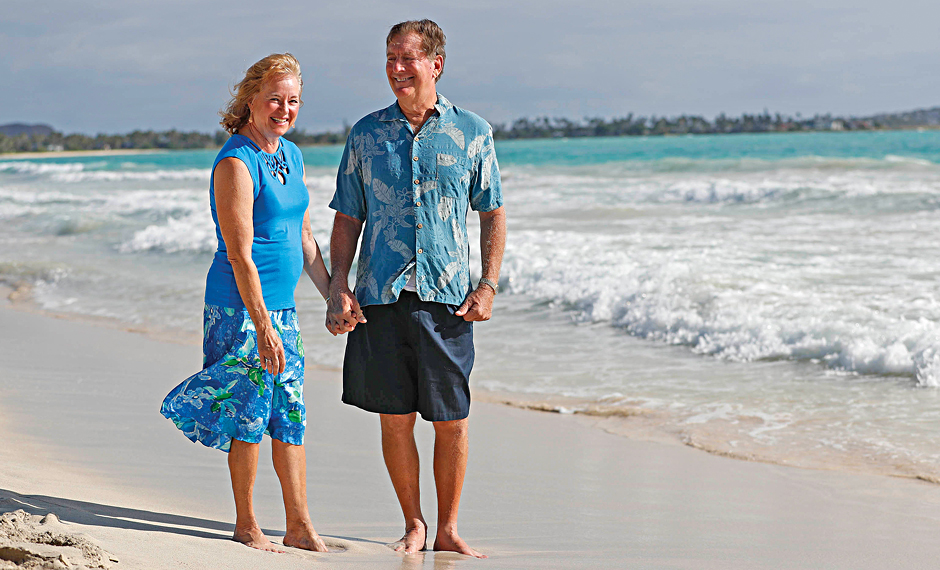
On March 23, 2019, Sandy celebrates the 60th anniversary of her surgery and considers herself a walking history of achievement for Deborah. Whether reminiscing over a past accomplishment or anticipating a new adventure, Sandy recognizes how Deborah made it possible. She not only met her future husband Donald while enrolled at Rutgers University, but was also part of the first class of women there, later working in the magazine publishing business in NYC. Sandy and her husband together successfully raised three accomplished children, and after 25 years on Wall Street, Donald left his job and moved the family to Oʻahu, Hawaiʻi, where they could not be any happier. Sandy credits Deborah’s compassionate, giving attitude for her lifelong passion to help others. After moving to Hawaiʻi, she became a special education preschool teacher, beloved by all her students and their families. Recognized as one of the leaders in strengthening Hawaiʻi’s Jewish population, she actively seeks out and welcomes newcomers to the Oʻahu Jewish community and currently serves as president of Congregation Sof Ma’arav, spreading her gratitude for life amongst all who know her.
Too young at the time of her surgery to understand in whose hands her life depended, Sandy later came to know Dr. Bailey as a pioneer in his field – an intrepid physician who believed that surgery could be performed on the heart just as any other muscle in the body. Although he faced much criticism amongst his colleagues at the time, today Dr. Bailey is considered the father of direct heart surgery. In fact, it was he who performed New Jersey’s very first heart surgery at Deborah. Although Sandy and her husband Donald live thousands of miles away, she knows that Dr. Bailey’s fearless spirit lives on at Deborah. Our highly specialized physicians eagerly embrace the most advanced diagnostic techniques and treatments for the benefit of their patients. As a result, they successfully treat patients other medical institutions cannot, and are routinely sought after to run clinical trials, evaluate and utilize potentially new medical devices, procedures and medications.
In 2014, Sandy wrote her memoir, A Jewish Girl & a Not-So-Jewish Boy. Chapter two is her Deborah story, and Deborah is listed as the first dedication. This is just one way Sandy follows Dr. Bailey’s words in his 1993 letter to her: “Do help Deborah when you can.” Sandy also helps through her more than 30 years of consistent donations to the Foundation, and her willingness to speak to Deborah audiences about her life-saving care whenever she returns to New Jersey and visits family. Dr. Bailey would be so very proud of Sandy and we are all thrilled that she has made the most of her life!
First printed in Inside Deborah Magazine, Deborah Hospital Foundation, Spring 2019
To make a donation, please text DEBORAH to 91999.

Deborah Patient Relives Past
“I remember being shocked by a conversation during which my mother asked how much longer I would live without surgery,” said Zimmerman, now Sandra Armstrong. “When Dr. Bailey said one year, she immediately asked what my chances would be with surgery. He replied, 50 percent. So you see, it is the 50 percent that I was granted to live – 50 percent with God’s help and 50 percent with man’s, because that is how I see Deborah, past, present, and future. The uniqueness of this hospital has always been the spirit of God and many working together to create miracles.”
In 1959, Deborah’s cardiac surgery program was still in its infancy, having seen its first open-heart surgery only a few months earlier. Dr. Bailey, however, was well-versed in cardiac care, formerly a heart surgeon at Hahnemann Hospital in Philadelphia. With his dedicated staff, he worked to ensure that Sandra would have her miracle. Details of the operation were later published in a newspaper article dated April 22, 1959.
She was prepared early Monday morning, March 23, for the operation and Dr. Bailey and his remarkable staff of doctors proceeded. As the fourth hour was about to come to a close, and after ‘Sandy’ had been aided by the heart-and-lung machine for a period of 67 minutes, it was over – surgery completed – half the battle accomplished, but just half, as ‘Sandy’ was now to enter the danger period of the post-operative recovery stage. For four days and nights a doctor, two nurses, and a nurse’s aide slept by her bedside, keeping a 24-hour-a-day watch – for days, everyone prayed for the little child and her parents.
At five years old, Sandra Zimmerman’s world should have consisted of attending kindergarten and playing with dolls, not of an impending operation and uncertain future. Unfortunately, in 1959, those were the circumstances that consumed her days. Born with atrial septal defect (ASD), an abnormal hole between the heart’s two upper chambers, Sandra’s life depended on open-heart surgery. “In 1959, I was a very sick child awaiting surgery,” recalled Zimmerman, in a speech given at Deborah Heart and Lung Center’s 80th Anniversary Celebration. “And not just any surgery, but lifesaving, open-heart surgery to fix a hole in my heart.” Despite her age, Sandra was surprisingly aware of the severity of her situation. In fact, after 44 years, the conversation between her mother and Charles Bailey, MD, Deborah’s pioneering heart surgeon, still lingers in her mind.
Today, Sandra is a staunch Deborah supporter, making certain to inform everyone she comes in contact with of the great deeds being done every day. But she is not the only one. Thousands of patients boast of Deborah’s wonderful physicians and caring staff. Thousands more form a vast volunteer pool, dedicated to raising funds and awareness on behalf of the Center. All of this support reciprocates the good will that Deborah has bestowed upon others. “Deborah teaches the art of giving back to humanity,” said Armstrong. “This is an art form of the highest quality and beauty. Patients, along with their families and friends, have learned to take this unconditional love and shape entire lives. So many of us have had the opportunity to truly experience the Deborah culture and our need to return the kindness is enormous.”
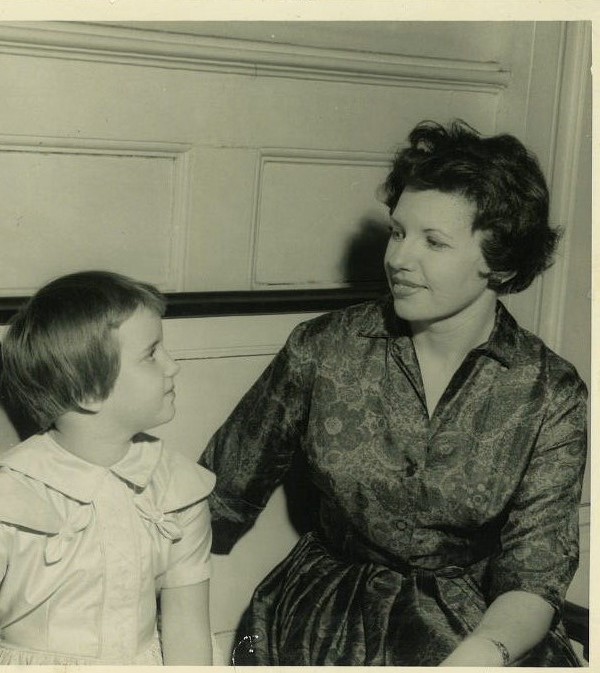
Those prayers were answered, giving Sandra not only a second chance at life, but also a lesson in the goodness of humanity. “Even though I was young, I could see that my mother was having a hard time keeping things together and I knew that my death would be more than she could bear,” remembered Armstrong. “This is where Deborah and its wonderful staff were of great help. Out of the four weeks my mother and I lived there – two weeks before the operation and two weeks after – we were treated like royalty. It was because of Deborah’s love for the patient, as well as the family, that we were made to feel completely at home. We were never alone; we were part of the Deborah Family. This is an ingredient unique to Deborah. To take a fearful child and mother and nurse them physically, as well as mentally, is one of its greatest strengths.”
More went into Sandra’s success than just the work of Deborah’s operating staff. In a true show of compassion, dozens of people – family, friends, even strangers – took the time to donate blood, giving freely of themselves to help someone in need. “My father’s office at the New York Post donated, the Jewish War Veterans had a busload of donors ready, and my uncle’s office of 100 donated; so much blood and so much love went into my survival,” said Armstrong, mentioning a gentleman who, years later, calling to wish her ailing father well, told her he was one of the many who gave blood. “It hit me right then, hundreds of people donated their blood, and I didn’t even know them nor could I thank them. I do know that the blood and the flesh that stand before you today are not of my own; hundreds of people are responsible for the blood that circulates through me. Deborah is the place where this kind of goodness does, and will continue to, exist. The hospital’s light shines through humankind like a sparkler on a dark night. This light reaches out to the whole of humanity. It doesn’t matter your race, color, or religion, Deborah teaches that life is life and there is no price tag. That lesson is taught each and every day here, and the ripple effect out into the greater community is enormously powerful and necessary.”
Not surprising, Sandra’s story takes up but a small portion of the boundless archive detailing Deborah, from its modest beginnings as a tuberculosis sanatorium to its involvement in breakthrough technologies redefining cardiac care. None, however, are more impressive than those told by the Deborah Family, the people who have been most touched by the good works of this philanthropic institution. It is because of those stories that Deborah thrives, keeping its presence in the hearts and on the tongues of many.
Originally published in Deborah News, Volume XXIII Issue Number 1, 2003.
She Returns to the Site of Lifesaving Surgery

Sandy Armstrong went home again in early December. She went back to the Deborah Heart and Lung Center in Browns Mills, N.J., a place that she remembers as “an island of hope” in a very turbulent time of her life. When Armstrong was just 5 years old she had lifesaving open-heart surgery to repair a hole in her heart. At the time, her chances of survival were 50 percent with surgery and zero without it. The operation was one of the first pediatric cardiac surgeries done at the hospital by Dr. Charles Bailey, a pioneer in the field. At the time, an entire month stay was required – two weeks to prepare the patient and two weeks to recover. Today children with the same congenital defect spend only a few days at the Center. Even at such a young age, Armstrong was aware of the seriousness of her condition since she had overheard her mother discussing the operation with Dr. Bailey. Still, she was totally at ease. She remembers an overwhelming feeling of being loved and comforted by the staff.
Deborah Heart and Lung Center was founded as a tuberculosis sanatorium in 1922. From cozy cottages in the woods built for patients with nowhere else to turn, the Center has grown into a modern medical facility through the years. The spirit, however, has remained unchanged. Founder Dora Moness Shapiro had the vision of an oasis where anyone could go regardless of race, creed, or financial situation. “There should be no price tag on life” was the motto that she lived by. Since its founding, no patient or family of a patient has ever received a bill for treatment. Deborah accepts third party insurance payments, and costs not covered by insurance are paid for by the Deborah Hospital Foundation.
When Armstrong was invited back to the hospital center as a guest speaker to celebrate the institution’s 80th anniversary she had mixed feelings about going back although she knew that she couldn’t turn down the invitation. She had anticipated the trip back with trepidation since it was full of so many emotional memories, but it turned out to be a very positive and happy experience. The night before the speech she stayed in the same building where she had bunked with her mother for a month in 1959. “While I was there I remembered how happy I had been and the apprehension was gone,” she said. The speech that she gave left few dry eyes in the audience. She said in part: “I slept with wonderful memories of Deborah Hospital and my mother at my side. I saw myself at 5-years-old in my little gray wool coat with velvet collar, holding my beautiful mother’s hand and then I remembered how very happy and secure I felt here. Last night I truly came home.”
She went on to say how much the operation had meant to her family and how she learned about the “Art of Giving” from her experiences as a child. She told about how 35 pints of blood had been needed for her surgery. The blood was donated by her father’s coworkers at the New York Post, by her uncle’s friends, and by a busload of Jewish War Veterans who had heard about her plight. She said in her talk, “I know that my blood and my flesh that stand before you today are not of my own. Hundreds of people were responsible for the blood that circulates through me. I don’t know where my blood begins and theirs end. Deborah is the place where this kind of goodness does and will continue to exist.” After the speech, doctors and nurses rushed to the podium to tell Armstrong that they often forget how important their jobs are and that they were very grateful to be reminded.
“I knew her speech would mean a lot to our staff, but I had no idea how great an emotional impact it would have on the audience,” said Kimberly Almon, director of public relations, who was overwhelmed by the audience full of teary eyes. For several days after, people kept stopping in the halls to tell her how wonderful it was to hear from a former patient. “Hearing from people like Sandy really brings it home to them what they are doing for society every single day. We see all these patients every day but don’t always realize the effect that we’re having on their lives,” said Almon.
Armstrong credits the hospital with even more than saving her life. “I learned unconditional love there and I’ve always felt the need to return the kindness,” she said. In addition to donating her Bat Mitzvah gifts to the hospital and helping out with fundraising, Armstrong has incorporated the early lessons she learned about giving into her everyday life. She has raised her three children, Zachary, 19, Tammie, 17, and Tiffany, 14, with an appreciation for the compassion and love that she was shown at age 5 and with the realization that they too are the legacy of the Deborah Heart and Lung Center. “My art of giving is through my local synagogue,” she said. As membership chair at Temple Israel in Ridgewood she has brought in 150 new families. “I love taking someone who is new and making them feel welcome,” she said. Along with her husband, Donald, whom she credits with always being extremely supportive, she will be honored on April 5 at the Temple’s annual testimonial dinner for many years of service.
Originally published in The Ridgewood News. Article by Gloria Geannette, Managing Editor.


“There Should Be No Price Tag on Life”
Donating Blood is Colorblind
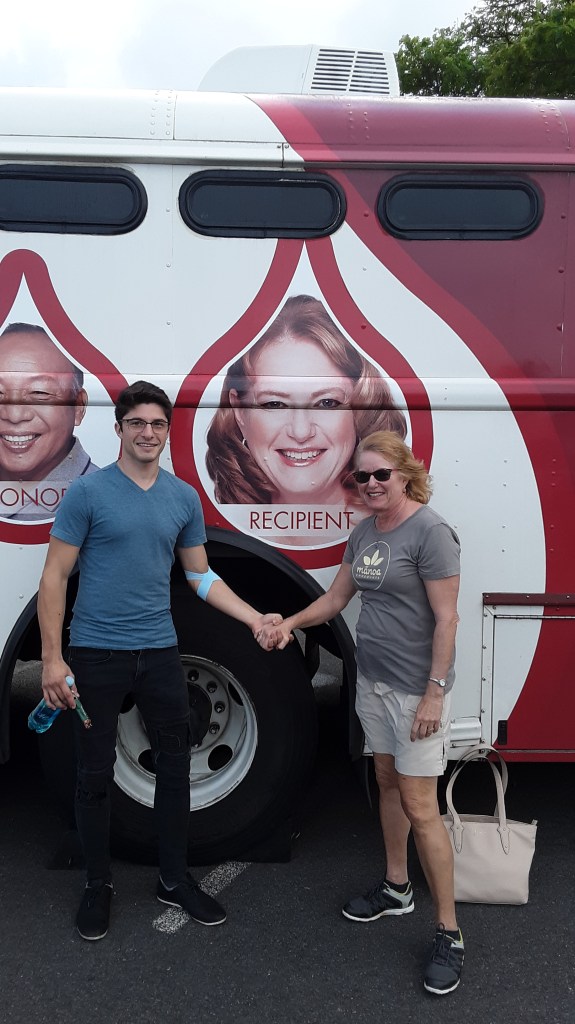
As I donated blood, I glanced up to see three other people sitting back and relaxing. It occurred to me that we look so different on the outside; I mean really different (man, woman, race, color). But what we were doing to save lives was the essence of life, and that is colorblind. The first time I successfully donated blood was in Hawaiʻi at my daughter’s Honor Society blood drive at Kalaheo High School in the school library. I was nervous, because previously, I was rejected for not being able to give. But in Hawaiʻi, I did it! And then I did it again, and again. It felt so great to walk out into the sunshine and recognize that saving someone’s life was the best feeling in the world.
Last week, I received my usual call to donate blood. I thought, should I do this? Me of all people? I remember an elderly man calling me right after my Dad’s death. “You don’t remember me, but I donated blood for you over fifty years ago.” Suddenly, I was hit by the full realization that hundreds of strangers had donated their blood for my survival. I don’t know them, and I can’t thank them. It occurred to me that my blood and my flesh are not of my own. Good-hearted men and women were responsible for the blood that pumps through my veins. After all these years, I still do not know where my blood begins and theirs end.
My surgery was in 1954 when I was five years old. It took thirty-five pints of blood to close up a hole in my heart. A hole that made my survival rate fifty percent. What did I know? I was just a little girl clinging onto my mother. But this is where I learned what unconditional love to a stranger means. Love is when a whole busload of war veterans donate their blood to a child that they have never met. That’s exactly what happened to me. Love is donating a vital part of you, like your blood; to someone you will never meet.
This month, I donated blood in the bloodmobile situated at St. John Vianney in Enchanted Lakes, Kailua. (The bloodmobiles are clean, safe, comfortable and staffed with professionals). Church had just let out, and I sat among congregants who were feeling good, eating donuts, drinking coffee, and having a great time talking among each other. I thought, what a peaceful, perfect, harmonious day. The whole trip to the blood bank took less than an hour of my time. I read a manuscript while donating and after my one-pint of blood was given, I hardly noticed that I was done. As Christine Flores administered to me, she responded to a few questions. She said, “There is no age limit to donating blood, as long as your remain in good health. The red blood cells are usable under refrigeration for thirty-five to forty-two days. The plasma can stay frozen up to a year, and the platelets last five days in constant motion.”
We are all the same inside despite our outward appearances. Your blood is no different than mine, and so on, and so on. I think that sometimes we forget this.
An Easy Way to Give Back to Life and to Remember
I donated blood in memory of Dr. Daniel J. Braun of Kailua. The atmosphere of giving was exactly what Dr. Dan would have loved. He was a doctor cherished by our community and a part of us forever. We personally thank him for the time his practice saved my husband’s life, which led to quadruple bypass surgery. The time he looked after our youngest, late one night, to evaluate sand in her eye. The way he bandaged up my middle daughter from a moped leg wound, the day before she was to leave for Chile. Giving blood in memory of Dr. Dan was a real way to say aloha to him. He saved so many of us in so many ways and it is with the hope of giving blood back that we somehow reach a “star” of a man in heaven for the goodness he taught us all. We miss you Dan. Perhaps our blood will save someone else.
Donald’s Open Heart Surgery, 2009
I described being wheeled on the gurney into the operating room for my heart surgery. This sunny Hawaiian morning in December, I was now the one accompanying my loved one along the corridor awaiting surgery. He had been given the anesthesia and was drifting off to sleep as I walked alongside him. This is how my mother felt; this was the same walk that my mother took. I am walking it now. And then I felt an enormous presence of angels behind us escorting us on our path to the operating room. Our journey would be a successful one, knowing that we were not alone. I did not ask for them to come, I only felt that they were with us. I did not see them surrounding the back of us their shapes or forms. I cannot describe them physically; I just knew they were with us, watching over us. I walked to the waiting area confident knowing Don was in good hands.
The next few hours passed as I read and studied my Hebrew grammar book in the waiting area. When Dr. Chung came out to tell me that the surgery was successful, I was elated, called everyone I could, I couldn’t stop the gratefulness of the moment. He made it, and we had our lives back! The Intensive Care Unit nurse came to get me, and I saw Don hooked up to the breathing tube and the other suction tubes for drainage. When he woke up, he became agitated, as the nurse warned me that he might. He did not like the breathing tube in particular. He was struggling. I kept saying, “Calm down, the worst is over, you’re ok, you will be ok, it’s ok, I love you, you made it, you will be fine, calm down,” and eventually he did but there were tears in his eyes. Tears that I have since only one other time in 32 years.
I stood watch over him while he was in intensive care and then moved to another less intensive unit the next day. They would not let me sleep in the immediate intensive care the first night, but the second and third night, I stayed with him on a pull out chair/bed. I whispered prayers of healing, and prayers to alleviate pain, and I told him I was proud of him and that I loved him. I had to watch his pain medication dosage for the timing. When he didn’t get the medication on time due to his room change (it happened once), he was in a lot of pain. I vowed not to let it happen again, so I politely bugged the nurses every three and a half hours. Can you believe this? I was able to stay with him all day Friday and Saturday into Sunday morning until he was released to go home. I almost passed out when Dr. Chung came in to see him Saturday morning and asked Don if he wanted to go home. Don, of course said, “yes,”, and all I could think of was how am I going to manage him at home, and “what if this, and “what if that … ”
Sunday morning rolled around and Dr. Chung gave him the OK. I called my daughter, Tammie, who was home at the titne and she and her boyfriend Dylan were cleaning up the house and the yard, and Tammie said,” We aren’t ready yet!” I will never forget the drive from Queens hospital home to Kailua, down the H1 highway and onto the Pali Highway. Don had to sit in the backseat and hold his special heart surgery pillow to his chest; he couldn’t wear the seatbelt over his recently opened chest’. It was just like driving your first infant home after the delivery. Cautious does not even describe the passage home. In retrospect, I realized Don was like an infant, starting his life again anew with a new heart, completely rewired, he had been shaved like a baby for the surgery, and he was beginning again a new life.
The kindness over and over again that we received at Queens Hospital both pre-op and post-op was just like Deborah Hospital to me. Same, same. How could that be? Five thousand miles away from each other and here were the two hospitals that saved our lives, one in Browns Mills, New Jersey and the other one in Honolulu, Hawaiʻi. The hospital staff at Queens catered to Donald and to me (his spouse) with the utmost care. After his immediate Intensive Care Unit within the first 24 hours, he was moved to a beautiful private room with all the amenities of home, and a pull out chair for me to sleep next to him. My mother did the same for me. But look at the difference in our surgeries. I had a 50% chance of survival and spent a month before the surgery and a month after the surgery recuperating. Don’s survival was over 90%. He arrived the morning of the surgery and was out of the hospital within 4 days. Thirty-three pints of fresh blood were needed to be rounded up from my willing donors on the hospital premise. Nothing was even mentioned to Don or myself about the need for extra blood for his surgery. But what remained the same, the constant from my surgery in 1959 to Don’s in 2009, fifty years apart, was human kindness. Technology advances our survival rate as humanity cements our lives.
It was his absolute certainty that took us through the whole process. The angiogram was on Monday and his surgery was scheduled for Thursday. This hardly gave us anytime to think much about the consequences, it was pure action. Once home, Don’s health progressed and he became stronger every day. We joked about matching scars. But it wasn’t until Joana Magno spent 45 minutes talking to us on a lovely Saturday morning, in Queens hospital, and mentioned that we were the youngest surviving heart patient couple (husband/wife) that she knew of that understood the full blessings of the double miracles. In fact, Joana asked us to represent the American Heart Association in Hawaiʻi at a fashion show benefit to raise awareness of heart disease. We were to model for Macy’s as our heart stories were read from the podium. What fun, what a good cause! So we did it.
Here is a piece written about that wonderful day of sharing heart stories and “giving back” to our caregivers.
Hi All,
THANK YOU very much for being a part of our first ever Fashion Show and Health Fair to kick-off American Heart Month! It was amazing to see the group of you representing life after a cardiovascular incident(s). I appreciate that you allowed us to share your stories to raise awareness and really emphasize that cardiovascular diseases (including stroke) does not discriminate in age, gender, background, etc., but that it can happen to anyone at any time. You all really put the face and life into the work we do, thank you for your continued support of our mission.
Lori K. Suan, MPH Executive Director-Hawaiʻi Division,
American Heart Association/American Stroke Association, Pacific/Mountain Affiliate
Here is the email correspondence from Don that went out to the East coast and Hawaiʻi on December 2, 2009.
Aloha all,
Many of you may have noticed that I have not been at shul the last two weeks. This is likely to continue for a few more weeks. I have had a number of medical procedures, all of which have gone well. The biggest surprise to me, however, is that I need heart bypass surgery. Significant blockage was discovered during a routine heart exam. It was a surprise because I have had no symptoms of heart disease. However, my father had a silent heart attack in his fifties, which was later discovered when he went in for elective stomach aneurysm surgery when he was 65. The good news is that except for my heart, I am healthy. My weight is down, my blood pressure is good, my fitness is excellent and my spirits are high. There is no damage to my heart muscle despite the blockages, because the ancillary arteries have fed the blocked heart muscle.
My surgery is scheduled for this Thursday morning at the Queens Medical Center. Dr. Eric Chung will perform the surgery. The surgery should be over by 12:30 PM and I expect to be in the ICU for two days, followed by an additional two to three days of recovery in the Heart Center at Queens. I should be released on Monday or Tuesday to recover at our home in Kailua. I hope to see you at the Sof Ma’arav Chanukah Party on Saturday evening, December 12th at our house in Kailua.
The beat ( and the party) goes on!
Sincerely,
Donald Armstrong
President
PS: Sandy says bring lots of latkes.
 Jewish Girl Meets Not-So-Jewish Boy