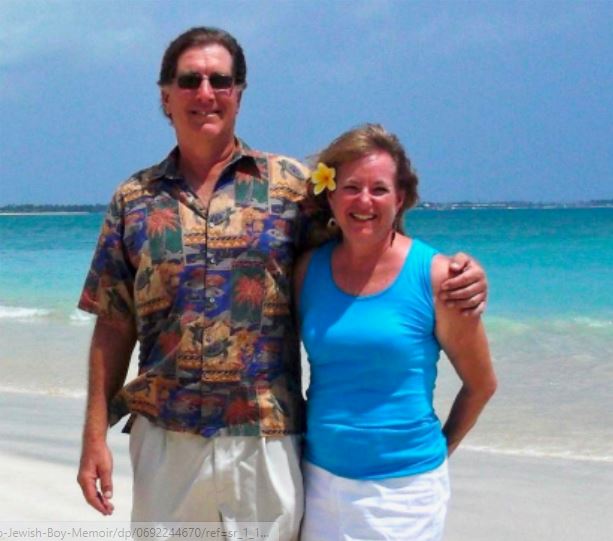
Sandra M. Z. Armstrong
Sandra M. Z. Armstrong is a retired special education teacher in Hawaiʻi. She holds a bachelor’s degree in speech communications from Rutgers University and a special education teacher’s degree from Chaminade University and Hawaii’s Department of Education Arlise program.
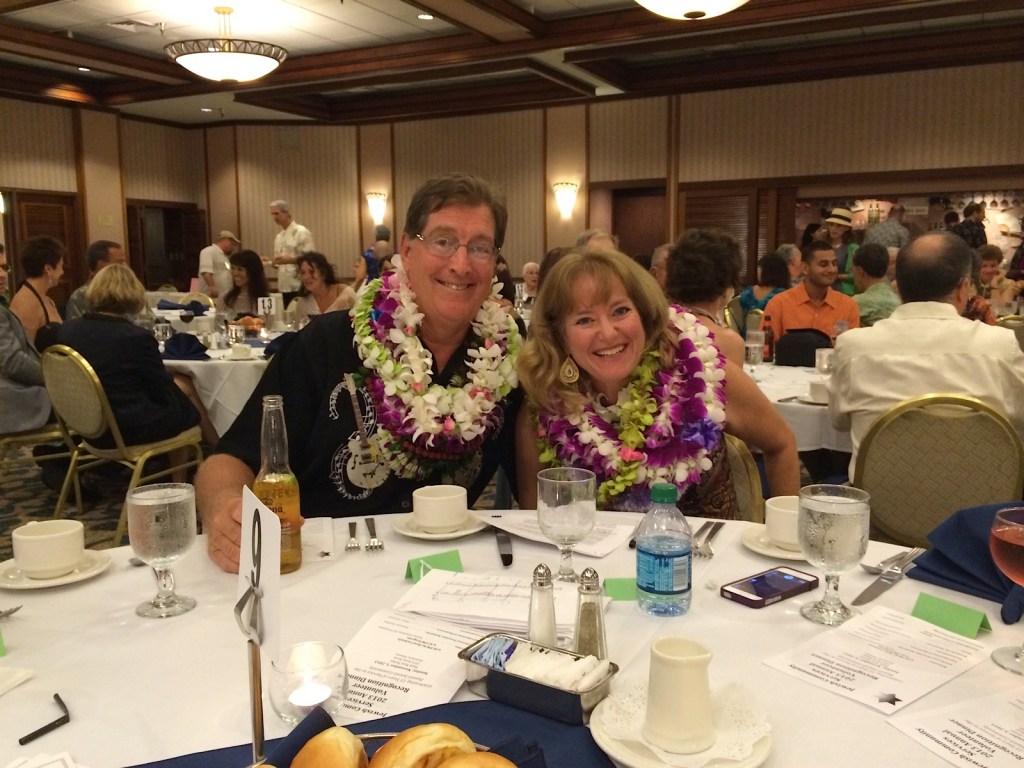
Upon her husband Donald’s retirement from Wall Street, they moved from New Jersey to Hawaiʻi, where he is now the past president of Congregation Sof Ma’arav and she is the current president. Donald and Sandra were honorees at the Jewish Community Services Annual Volunteer Recognition Dinner in 2013 and are noted for regularly hosting special events, services, and holiday celebrations for Oahu’s Jewish community. Opening doors and welcoming all is their mission both in their congregation and in their home.

Hearts in the Uttermost West
Onetime intermarried Ridgewood family, now all Jewish, moves to Hawaiʻi
An ocean away, Donald and Sandra celebrate their new Jewish life. When we last heard from them, 10 years ago in May, the Armstrongs – Sandra, Donald, and their three children – had just moved from Ridgewood to Oʻahu.
Their story, as chronicled in the Jewish Standard on May 2, 2003, had been dramatic enough to start with. Donald, who worked on Wall Street, the son of a retired U.S. Army general, a Presbyterian, married Sandy Zimmerman, a somewhat apathetic Jew. Their initial attempt to bring their children up in both religions gradually grew into a family growing ever more actively Jewish. Donald studied Judaism and he learned a great deal, but he was always on the outside.
And then he was inside. Guided by two husband-and-wife Conservative rabbi couples – Rabbis Noam Marans and Amy Roth, and then Gil and Batya Steinlauf, both men in turn rabbis of Temple Israel and Jewish Community Center – Donald converted, becoming a Jew.
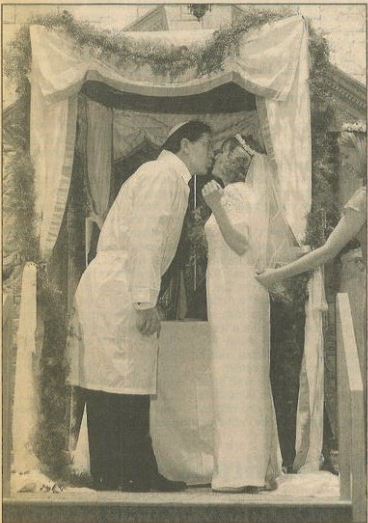
In April 2003, Donald and Sandy Armstrong had a second wedding ceremony, this one under a chuppah. The next month, they went west. Very far west. To the end of the western world.
Sandy Armstrong has written a book, A Jewish Girl and a Not-So-Jewish-Boy, about her family’s experience as it went from being interfaith to sharing a strong single faith, and about what it is like to be Jewish in a place she describes as sounding very much like paradise.
They moved not knowing exactly what to expect, she reports. “We went because Donald had been an Army brat, and he lived here, in Hawaiʻi, through part of middle school, when his father was stationed in Viet Nam. Those were some of the best years of his life.”
And now he had just lived through some of his most confusing years. He had worked in finance on Wall Street; in the aftermath of September 11 he lost his job. He took the “nice severance package” he was offered by his former employers, got his and his wife’s children’s enthusiastic assent, bought a house in Hawaiʻi, sold their house in New Jersey, and moved. “Neither of us had jobs when we got there,” Armstrong said.
“It was like jumping off a cliff into the ocean. You just jump, and know you’ll land okay.
“It was sort of like Lech Lecha,” the Torah portion where God tells Abram to “go forth from your native land and from your father’s house to the land that I will show you.”
In Hawaii, Donald Armstrong “got a job working blue-collar construction,” Sandy Armstrong said. “This was a Wall Street guy. He rarely did anything around the house. We hired everyone for everything.” But he started helping out the construction crew that was remodeling the house they had bought – “I called him one day, and he said, ‘I can’t talk, I’m welding the bathroom!’” – and that turned into a job, from which he is now retired. Sandy Armstrong, who had earned an undergraduate degree in education from Rutgers, became certified to teach special education in Hawaiʻi, and she now heads a Head Start inclusion kindergarten class.
The Armstrongs’ Jewish life has grown, too. Donald Armstrong is now president of their shul, Congregation Sof Ma’arav, a Conservative shul that “is the westernmost synagogue in the western hemisphere,” his wife reported. “We are the last ones to close the gates on Yom Kippur.”
Sof Ma’arav takes its name from the famous 11th-century Spanish poet Yehuda HaLevi, who lived in what was the westernmost part of the known world, and certainly the westernmost Jewish community. “My heart is in the East, and I am in the uttermost West” – b’sof Ma’arav” he wrote, soon before he took the trip toward Israel, dying either before or as he reached his goal. (Details of his death are buried in legend.)
The shul was established more than 40 years ago, Armstrong said. It does not employ a rabbi or cantor, although Mel Libman, a retired Conservative rabbi, is an active member who helps out with life-cycle events, including conversions. Donald Armstrong used his Wall Street-honed negotiation technique to help the shul buy a cemetery, and Sandra Armstrong teaches Hebrew. Donald learned to read Torah, and he often does so.
“When we lived in New Jersey, Don rarely made it home for Shabbat dinner,” Sandra Armstrong said. “It was always me and the children.
“Now, he’s always here.”
Shabbat dinner often is outside, under the stars.
The Armstrongs find that it is not hard to keep kosher in Hawaiʻi. The local supermarket stocks kosher meat, and the climate demands lighter meals anyway, with more vegetables, rice, and fish.
Many Jews come to Sof Ma’arav on vacation, and many of the local Jews’ friends and family visit, so there are often visitors filling out the 80-family congregation’s pews. It has hosted Shoah survivors and survivors of the illegal immigration ship Exodus in 1947. “The combinations of family members, guests, and friends from the East Coast truly has been amazing,” Armstrong said. “We are the hub of the Conservative movement in the middle of the ocean.”
The shul does not have a building. Services usually are held in the local Unitarian church, but when holidays conflict, “we have services right here, on our lanai,” she said. “We have a Torah [scroll] in our home. It has become a member of our family, and we love it.
“Standing outside in my yard during services and listening to the music coming from my living room is an indescribable joy.”
As strongly as she feels about the wonders of Hawaiʻi, Sandy Armstrong feels even more passionately about Judaism. “About 50 percent of Jews are intermarried, and only about 25 percent of their children are raised as Jews,” she said. She wants people to know about the outcome of what used to be an intermarriage; what was possible for her also is possible for them.
“Why not chose Judaism?’ she said. “Go for it. Raise your kids to be Jewish. Why not choose Judaism over Christianity? It’s a wonderful religion.”
Originally published in the Jewish Standard. Article by Joanne Palmer, February 8, 2013
Wedding Completes a Convert’s Journey
After 25 years of marriage, pair has religious ceremony
The first time Sandy Zimmerman and Donald Armstrong got married, a justice of the peace did the honors in the Highland Park mayor’s office before an intimate gathering of family members. Donald wore a Hawaiian shirt, Sandy wore a short white dress. The second time, some 25 years later, Donald was decked out in a tuxedo, Sandy in a full-length wedding gown. The ceremony, officiated by Rabbi Gill Steinlauf, was witnessed by 200 friends and relatives at Ridgewood’s Temple Israel and Jewish Community Center. The couple’s son, Zachary, was best man. Their daughters, Tammie and Tiffany, were bridesmaids.
“This time around, I feel like a new bride, but I know what I’m getting,” joked Sandy a week before the ceremony. What she got was Donald, who hasn’t changed much except in one respect: He’s Jewish now. The April 5 wedding – which took place under a traditional canopy, accompanied by a traditional marriage contract, witnesses, and seven blessings – was the joyous culmination of Donald’s recent conversion to the religion he’s been learning about ever since he met Sandy at Rutgers University.
“When we got married, I was Presbyterian,” said Donald, an “Army brat” whose father was Methodist. His dad was stationed in Germany and couldn’t attend Donald and Sandy’s 1978 wedding. Now he was on hand to walk Sandy down the aisle; her own father passed away last year. From the start, the Armstrongs decided to raise their children as Jews. “We decided we would make it work,” said Donald. “We moved to Ridgewood 18 years ago and found a temple I felt comfortable with. We were both from middle-class backgrounds, and our values were similar except for some questions of faith. Faith was the only thorny issue for me.” In the meantime, both Donald and Sandy became familiar faces at the temple, taking adult-education classes and leadership roles.
In fact, the April wedding was the highlight of a larger event, a temple testimonial dinner at which the Armstrongs were honored for their years of service to the congregation. It was also a sentimental sendoff, because the family is relocating to Kailua, Hawaiʻi, in June. “We are starting again,” said Donald, an avid surfer who has yearned to return to Hawaiʻi since attending high school there. “We’re ready for the second part of our lives, to turn 50 together in the 50th state.”
“We knew it was meant to be,” said Sandy, “when we visited Kailua and found two synagogues, one Conservative and one Reform, right next to each other.” They plan to join both, and hope to attend services along with occasional visitors from their Ridgewood synagogue, who already are booking dates to stay with the Armstrongs in Hawaiʻi. “I’m sure there are a lot of people at Temple Israel that didn’t realize I wasn’t Jewish because I had always been active and had encouraged Sandy to be active,” said Donald, an investment banker. “I was part of the Men’s Club and the softball team and I attended services regularly.”
As a non-Jew, however, Donald couldn’t read from the Torah scroll or accept other liturgical honors, nor could he be buried with his wife in a Jewish cemetery. “I thought long and hard and decided Judaism is a better faith for me.”
“We were both learning and evolving,” added Sandy. “My parents celebrated Hanukkah and Passover, but I wasn’t sent to religious school and didn’t go to synagogue. With Donald’s encouragement I took Hebrew reading classes after Tiffany [now 14] was born. So we learned everything together and eased into it.” Following Sandy’s adult bat mitzvah and those of their children, Donald joined the temple’s conversion class, taught by Rabbi Batya Steinlauf, a teacher who is the wife of the synagogue’s rabbi. Sandy accompanied him to every session. “There were four or five couples, and it was a great class,” recalled Donald. “Coming after years of being active in Jewish life, it filled in some gaps for me. I had celebrated [Jewish] holidays but couldn’t tell you the exact sequence of them. Studying made it all hang together.”
Following the final stage of Donald’s conversion – a symbolic circumcision and immersion in a ritual bath – he and Sandy wanted to supplement their civil marriage with a Jewish wedding ceremony. “Since we’re both religious people it was important to us,” said Sandy. But before they got far in their plans, the temple’s president, Evan Dobkins, asked them about accepting the honor of the testimonial. It was Sandy’ idea to combine the annual fund-raising dinner with the wedding. “It was fun to add the wedding ceremony to this year’s event,” said Dobkins. “It let everyone know this couple has been married under the huppah [wedding canopy].”
Bob Rohrberger, chairman of the synagogue’ ways and means committee, recruited volunteers to choose invitations, select the band and caterer, and attend to myriad other details, all at the temple’s expense. “The wedding generated more attendance, but Sandy and Donald are also active and popular members of the temple,” said Rohrberger. Dobkins said the Armstrongs “are impossible not to like. They represent the vital fabric of our community, and they’ve been involved in ways that really build our synagogue. We’ve watched them grow and flourish along with our community.”
Both Sandy and Donald received standing ovations for their speeches at the testimonial, but they truly took center stage as bride and groom. Donald waited for Sandy under the huppah, his tuxedo topped by a white kittel, the robe worn by many Jewish men at solemn occasions. Sandy ascended the platform and circled Donald seven times, a custom that Donald said was his favorite part of the ceremony. “Seven has great significance in Judaism,” he explained. “Just as the world was created in seven days, we’re creating our own world and she’s protecting me. We are creating our personal space under the huppah.” Dobkins said the occasion was bittersweet. “They’re moving across the pond to Hawaiʻi, so it was a happy and a sad occasion,” he said. “But hardly a person believes we’ve seen the last of them.”
Originally published in The Record newspaper of New Jersey, article by Abigail Leichman, photo by Tariq Zehawi.
Sandy Armstrong Returns to Ridgewood with Book
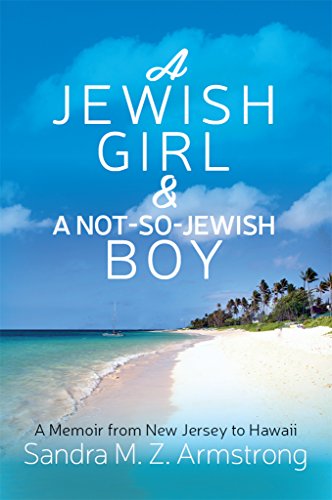
One could say that it all began with Ruth and Boʻaz. Ruth, a non-Israelite, chose to follow her Member-of-the-Tribe mother-in-law, Naomi, to a distant land, for reasons not entirely understood, after the deaths, in quick succession, of Ruth’s two husbands, Naomi’s sons. Fast-forward: Naomi introduces Ruth to her kinsman, Boʻaz, a wealthy landowner who made this appealing, loyal young woman his bride. According to the Jewish tradition, Ruth became our people’s first “convert,” whose story is retold every year on Shavuot. Just after Shavuot concludes this year, Temple Israel & JCC in Ridgewood will present a book talk and signing by another interfaith couple that chose one faith, Judaism, to call their spiritual home: Sandy and Donald Armstrong of Oʻahu, Hawaiʻi. Their joint Jewish journey began at TI-JCC, and they now retum to talk about their evolution as a committed Jewish family, a story captured in Sandy’s published memoir, A Jewish Girl & a Not-so-Jewish Boy: A Journey from New Jersey to Hawaiʻi. The event, free and open to the community on Wednesday, June 15 at 7:30 p.m. in the Temple Library, is co-sponsored by the synagogue center’s Sisterhood and Brandeis Men’s Club; Sandy and Don were active in each organization. Copies of A Jewish Girl and Not-so-Jewish Boy will be available for purchase and author inscription, with profits donated to TI-JCC.
Before Ridgewood, there was Rutgers University in New Brunswick. Blond, fun-loving Sandy, a Jewish girl studying theatre arts, was more interested in dating around than diving into a serious relationship. A handsome classmate, Presbyterian Don Armstrong, was a guitar-strumming wrestler who loved hanging around the girls’ dorm. Sparks flew when this Jewish girl and not-so-Jewish boy met on campus. When their entertaining, interfaith relationship turned serious and marriage ensued, they discovered plenty of challenges and heartfelt moments to test their love and religious commitments. In A Jewish Girl and Not-So-Jewish Boy, Sandy recounts the couple’s journey. At Temple Israel & JCC in Ridgewood, their first formal religious affiliation as young interfaith marrieds, they encountered an encouraging young rabbi and found a warm, welcoming community that motivated their love of and observance of Jewish laws and traditions. As their family grew, so did their knowledge and engagement in Jewish life, leading finally, to their decision to build a home committed to just one faith and Donald’s formal conversion and religious ceremony to renew their marriage vows under a chuppah. Regular attendance at adult education classes and Shabbat services went a long way towards Sandy’s increasing responsibilities as the congregation’s membership chair and on the Temple board of directors. By the time their move to Hawaiʻi was in the offing in 2003, Judaism had become a guiding force and source of joy and strength for the changes that lay ahead.
Sandy’s memoir is more than an endearing love story. It is a straightforward guide to understanding, adopting, and practicing Judaism, related in layperson’s language, rather than as a lecture from a sociologist or a rabbi. For anyone currently in—or considering—an interfaith relationship and struggling to achieve religious balance or someone who simply wants to learn more about how to live as a Jew, this book may be a wonderful source of inspiration and practical resource. In it, readers will find Sandy’s lively descriptions of Shabbat, festivals, celebrations, and community connections an accessible study to gradually adopt and implement a Jewish lifestyle.
In an age of increasing assimilation and interfaith marriage, Sandy offers this reason for the decision to share her experience:
So many of us know how it feels when a young person marries within our Jewish faith, when so many are marrying outside of the faith. This book is a hope for the future by setting an example of what could possibly happen when a couple from two religious backgrounds ultimately choose Judaism. It was a process, and a beautiful one at that! She further wonders: How can we best prepare future rabbis to understand the internal mechanisms of a non-Jewish spouse married to a Jew … This is a book that … sets an example for others to follow. It is current and it is meaningful. Today, Sandy is a special education preschool teacher and serves as the chair of her congregation’s Welcoming Committee in Oʻahu. Donald, who has retired from the financial sector since their move to Hawaiʻi, has worked in construction there and has been the president or Congregation Sof Ma’arav in Honolulu for the past eight years.
Originally published in Ridgewood News, Friday, June 10, 2016, written by Jane Rosen

 Jewish Girl Meets Not-So-Jewish Boy